
Spending at restaurants and bars grew more than 8 per cent compared to the year before.

The saving grace of Shankar's expanded universe is the masterful precision with which Kamal Haasan drops himself into a messy setup, only slightly to elevate the pulpy tendencies of Shankar's vision, observes Arjun Menon.

The Indian equity market is likely to remain under pressure and rangebound over the next few months. This comes as global central banks, led by the US Federal Reserve look at a possibility of hiking rates aggressively to tame inflation. Back home, the Reserve Bank of India, too, remains data dependent in its endeavour to keep inflation in check and pursue an aggressive monetary policy stance.

'If there is any reason to change my holding in Adani group stocks, the Hindenburg report on the group is not the one.'

From the Sensex pack, Infosys, HCL Technologies, Infosys, NTPC, Mahindra & Mahindra, Tata Consultancy Services, Nestle, Tech Mahindra and Bajaj Finance were the major gainers. Power Grid, Larsen & Toubro, Maruti, Titan, HDFC Bank, Wipro, HDFC and ITC were among the laggards.
Bajaj Finance was the biggest gainer in the Sensex pack, rising 2.70 per cent, followed by Power Grid, IndusInd Bank, NTPC, Bharti Airtel, ITC, Bajaj Finserv, Infosys, Nestle, Tata Steel, Tata Consultancy Services, Titan and Axis Bank. Reliance Industries, Mahindra & Mahindra, Maruti and State Bank of India were among the laggards.

What's different this time is that global financial stress -- which has its genesis in four policy choices made in recent years -- is juxtaposed with a more resilient real economy, observes Sajjid Z Chinoy, chief India economist at J P Morgan.

Investors need to understand and keep in mind how interest rates and the stock markets are related in order to make informed decisions.

Benchmark stock indices Sensex and Nifty fell for the third day running on Friday due to weak trends in global markets and soaring crude oil prices. Foreign fund outflows also weighed on investor sentiments amid strengthening US bond yields which are nearing 5 per cent for the first time since 2007. The 30-share BSE Sensex fell 231.62 points or 0.35 per cent to settle at 65,397.62.

An immediate RBI rate cut will lower lending rates for banks' MSME/retail/mortgage loans before the 'busy' industrial season ends in March.

The ongoing second quarter earnings, movement of oil benchmark Brent crude and the uncertainty in the Middle East would dictate terms in the domestic markets this week, analysts said. Furthermore, the activities of Foreign Institutional Investors (FIIs) will also influence trading in the markets. "A slew of earnings reports from heavyweights expected this week will significantly impact market direction.

Investors turned cautious ahead of the US Fed meet outcome later today and July F&O expiry.

The other prominent gainers were Tech Mahindra, HCL Technologies, Wipro, State Bank of India and Larsen & Toubro. Bajaj Finserv, Power Grid, UltraTech Cement and HDFC Bank were among the laggards.
The Indian stock markets' buoyant reaction to US Fed's decision to halt the interest rate hikes seems to reflect the growing clout of FIIs on the domestic bourses, which were falling like ninepins not long time back.\n

Bharti Airtel was the biggest gainer in the Sensex pack, rising 2.37 per cent, followed by Mahindra & Mahindra, HCL Tech, Tata Motors, Tech Mahindra, HDFC Bank, Wipro, Tata Consultancy Services, Axis Bank and Nestle. Asian Paints, Hindustan Unilever, Bajaj Finserv and NTPC were among the laggards.

Expect heightened volatility and stress to hit the markets. Caution may be the need of the hour, alerts Akash Prakash.

Of the eight RBI governors who have held office since the 1991 economic liberalisation, Bimal Jalan had the longest stint and S Venkitaramanan, the shortest. Current Governor Shaktikanta Das will overtake Bimal Jalan before completing his second term in December, points out Tamal Bandyopadhyay.

Dealers attributed the rupee's fall to increased demand.

Stock markets will be largely driven by global trends and macroeconomic data announcements in a holiday-shortened week which may see volatility amid monthly derivatives expiry, say analysts. Equity markets will remain closed on Monday for Gurunanak Jayanti. Trading activity of foreign investors and the movement of the rupee against the dollar will also be tracked by investors.

RBI Governor has been under pressure from Finance Ministry.

The recession-hit US economy has been witnessing signs of revival in recent months especially with the rate of economic contraction slowing down.

Losers included Bharti Airtel, SBI, Wipro, Vedanta, Maruti Suzuki, ICICI Bank, Axis Bank and Reliance Industries, falling up to 2.18 per cent.

Boom, bust or a bit of both: as the jury bides time before ruling on the US 'recession', the economy's vital signs at a perplexing time of high-interest rates, still-punishing inflation, and surprisingly strong economic gains are a study of a growing debate over whether the world's largest economy is barrelling into a new downturn. With the US Federal Reserve's (Fed's) inflation fighters attempting the risky pursuit of 'pillow-soft landings' and its economy sending out mixed signals, if there is indeed a recession, it could spell trouble for domestic equities and corporate earnings growth.

Foreign Portfolio Investors' (FPIs) selling spree continues as they pulled out over Rs 3,400 crore from the Indian equity markets in the first three trading sessions of November on rising interest rates and geopolitical tensions in the Middle East. This came after such investors withdrew Rs 24,548 crore in October and Rs 14,767 crore in September, data with the depositories showed. Before the outflow, FPIs were incessantly buying Indian equities in the last six months from March to August and brought in Rs 1.74 lakh crore during the period.

A weak dollar overseas also aided the rupee rise while fresh sell-off by foreign funds in domestic stocks capped the currency's gains, forex dealers said.

The sharp correction in equity markets has taken a toll on mid-and-small cap stocks that have underperformed their large-cap peers. Thus far in calendar year 2022 (CY22), the mid-and-small cap indexes on the BSE have slipped over 8 per cent and 7 per cent respectively, as compared to a fall of around 6 per cent in the S&P BSE Sensex. While investors dumped mid-and small-cap stocks as the markets remained choppy over the past few weeks, analysts still expect these two segments to see good investor interest from a medium-to-long term perspective.

64% of 800 investors polled think it will start this week but weak US data suggest it might not be aggressive.

State Bank of India was the biggest loser in the Sensex pack, shedding 1.69 per cent, followed by Asian Paints, Kotak Mahindra Bank, HCL Technologies, Reliance Industries, Wipro, IndusInd Bank, Infosys, Power Grid and HDFC twins. In contrast, Nestle, Maruti, Bharti Airtel, Tata Motors, ITC and Hindustan Unilever were among the gainers.

From the Sensex pack, Tata Motors, HCL Technologies, Power Grid, Tech Mahindra, NTPC, Axis Bank, Kotak Mahindra Bank, Larsen & Toubro, Wipro, Nestle, Tata Consultancy Services and Infosys were among the major gainers. Bajaj Finance, Bajaj Finserv, Mahindra & Mahindra, UltraTech Cement, IndusInd Bank and State Bank of India were the major laggards.
A firming trend in domestic stock markets, however, capped the rupee fall to some extent

RBI will take a cue from the Fed policy statement.

RBI would get the comfort of meeting its 8 per cent January Consumer Price Index-based inflation target, BofA-ML said, adding that 'we expect the RBI to cut 75 bp in 2015 from February with inflation on course to 6 per cent in January 2016'.

Month-end dollar demand from oil companies mainly affected the rupee value against the US currency, a forex dealer said.
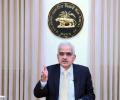
The challenge for the RBI in 2024 is likely to be less about containing elevated inflation and more about curbing excessive financial market exuberance and a 'problem of plenty', notes Sajjid Chinoy, Chief India Economist JP Morgan.

'Historically, the markets tend to perform well during election years as governments aim to increase spending and call attention to growth.'

Monetary policy easing, coupled with the relaxation of lending rules and greater election-driven fiscal spending in the first quarter of 2019, will provide some support to growth during the first half of 2019-20 fiscal
Traders rejoice when the Fed drops the rate, but...

'If individual stocks start falling 25% to 30% or more, then I doubt how many of them will be able to withstand that (kind of selloff). That is when you'll see panic coming in.'
Benchmark indices Sensex and Nifty ended with gains on Wednesday, extending the previous day rally amid lower level of inflation on domestic front and better-than-expected inflation readings from the US. The 30-share BSE Sensex climbed 144.61 points or 0.23 per cent to settle at 62,677.91. During the day, it jumped 301.81 points or 0.48 per cent to 62,835.11.
 © 2026 Rediff.com - Advertise with us - Disclaimer - Privacy Policy - Sitemap - Feedback - About us - Terms of use - Grievances